The Tree of Ocean Life
How everything in the ocean connects — from soft-bodied jellyfish to stealthy reef sharks. Start from the big split below, jump to the group you want to know more about, then work through the trickiest lookalike pairs.
The Big Ocean Split: Backbone vs. No Backbone
Everything living in the ocean belongs to one of two main teams.
Vertebrates (The Backbone Team)
Animals with a hard internal spine and skull, protecting their brain and spinal cord.
Who's on this team: Bony reef fish, sharks, rays, sea turtles, dolphins, and whales.
Why it matters underwater: An internal skeleton gives strong anchor points for powerful muscles — the reason these animals can swim fast, leap clear of the water, and dive deep.
Invertebrates (The Spineless Team)
Animals with no backbone at all — protected instead by a hard outer shell, a flexible water-filled body, or pure muscle.
Who's on this team: Octopuses, sea slugs, crabs, lobsters, sponges, and corals.
Why it matters underwater: Invertebrates make up over 95% of all animal species in the sea — without bones, an octopus can squeeze through a coin-sized hole, and coral can build a rock fortress the size of a reef.
Jump to a Group
Vertebrates (Backbone Team)
Bony Reef Fish
(Actinopterygii)
The Look
Hard bones on the inside, shiny overlapping scales on the outside, and a single gill slit on each side of the head.
Superpower / Secret Weapon
A gas-filled swim bladder works like an internal balloon, letting them hover at any depth without sinking or floating — no constant swimming required.
Visual Examples
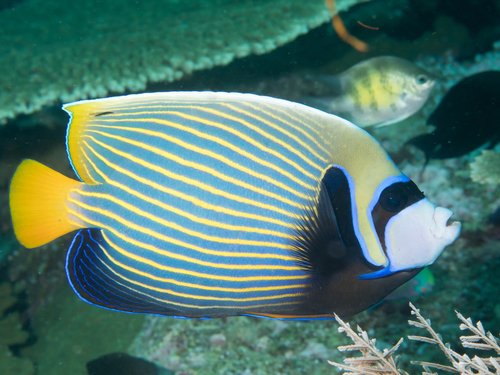
Angelfish
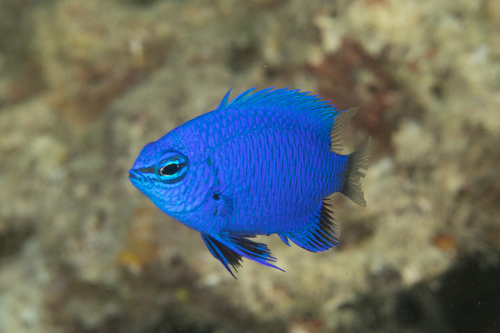
Clownfish
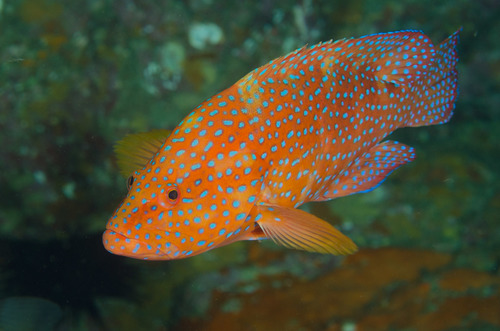
Groupers
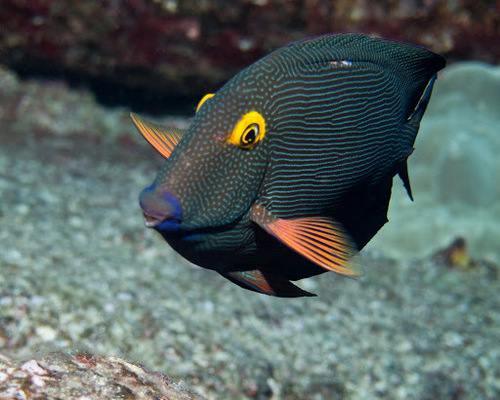
Tangs
Spot the Twin: Butterflyfish vs. Angelfish
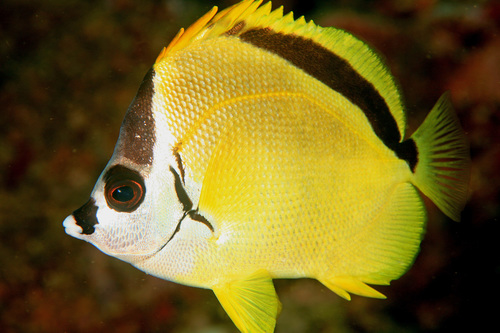
Butterflyfish
- Snout: Longer, more pointed — built for picking at coral polyps in crevices
- Cheek spine: None
- Dorsal fin: Single, continuous, unbroken fin
Angelfish
- Snout: Shorter, blunter snout
- Cheek spine: Sharp preopercular spine near the gill cover — the family's defining feature
- Dorsal fin: Single dorsal fin, often with longer trailing filaments
Sharks & Rays
(Elasmobranchii)
The Look
No hard bones at all — the whole skeleton is flexible cartilage, the same bendable material as your ears. Look for 5 to 7 open gill slits and rough, sandpaper-like skin.
Superpower / Secret Weapon
Most sharks have to keep swimming to breathe — forward motion pushes water over their gills — and many can sense the faint electrical signals given off by a fish hiding in the sand.
Visual Examples
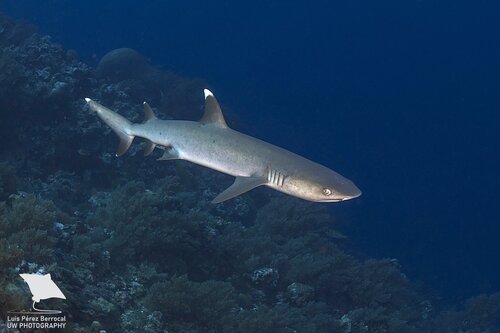
Whitetip Reef Shark
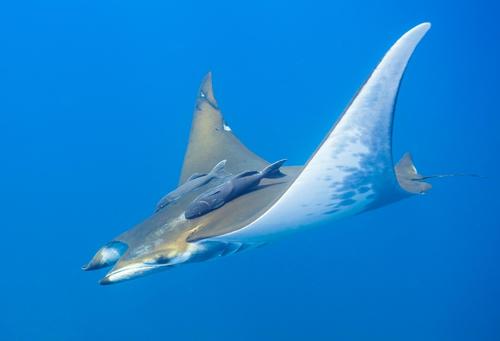
Manta Rays
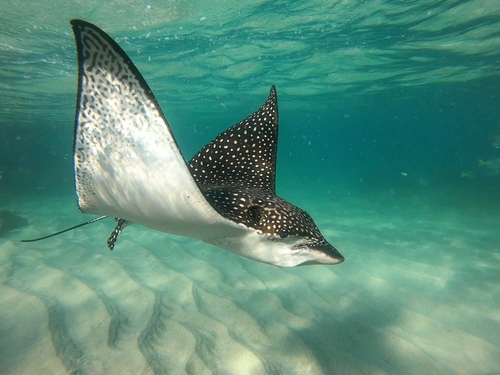
Stingrays
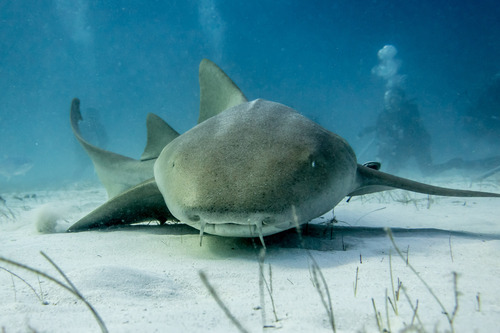
Nurse Sharks
Spot the Twin: Manta Ray vs. Southern Stingray
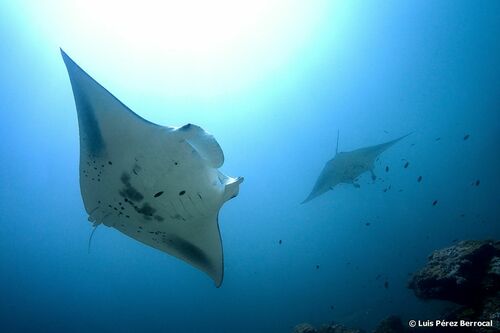
Manta Ray
- Where you'll see it: Cruising the open water column, often near cleaning stations
- Body shape: Diamond-shaped wings with paddle-like cephalic fins near the mouth
- Tail: Long and thin, no venomous spine
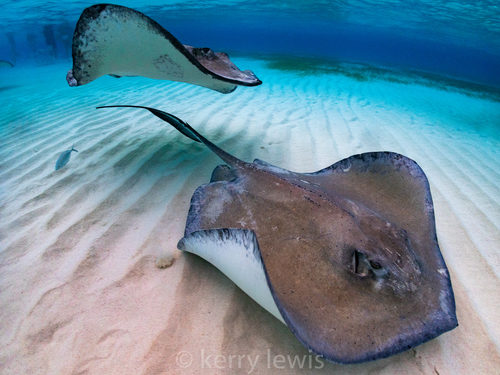
Southern Stingray
- Where you'll see it: Resting flat on the sand, often partly buried
- Body shape: Rounder, more oval disc with a long whip-like tail
- Tail: Whip-like tail carrying one or more venomous serrated spines
Sea Slugs, Octopus & Snails
(Mollusca)
The Look
Soft bodies with no internal skeleton — some carry a hard shell on the outside, while others, like octopuses and nudibranchs, have no shell at all.
Superpower / Secret Weapon
An octopus's only hard body part is its beak, so it can squeeze its entire body through any gap bigger than that beak — even a coin-sized hole.
Visual Examples
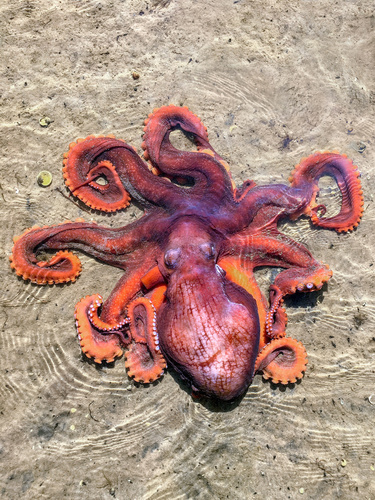
Octopuses
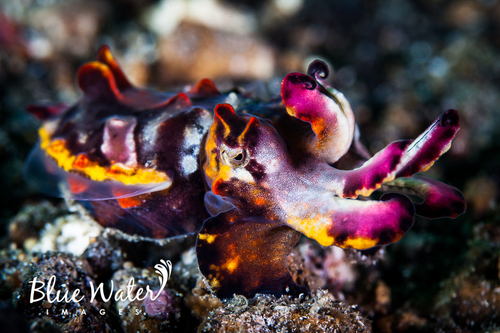
Cuttlefish
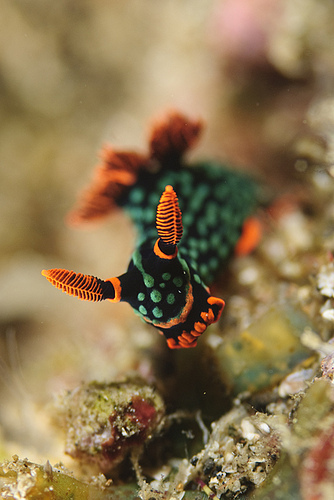
Nudibranchs
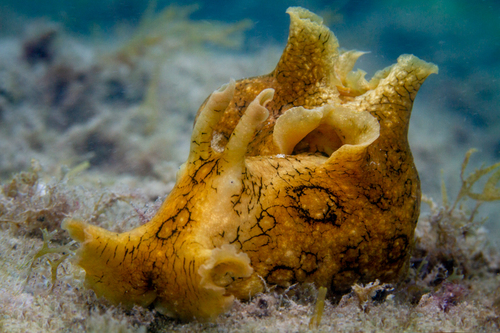
Sea Snails
Spot the Twin: Nudibranch vs. Marine Flatworm
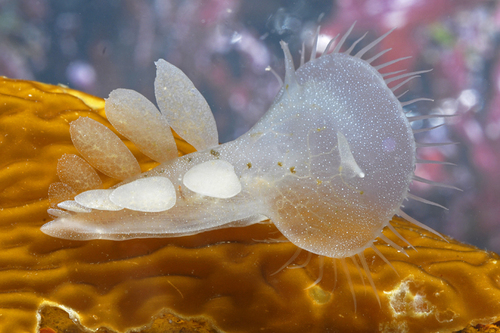
Nudibranch
- Gills: Feathery external gill plume (cerata) visible on the back
- Body shape: Thicker-bodied, usually with a pair of sensory horns (rhinophores) on the head
- Movement: Crawls on a muscular foot, some species swim with body undulations
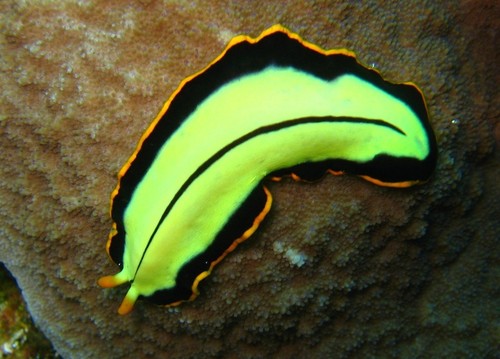
Marine Flatworm
- Gills: No visible gills — breathes through its flat body surface
- Body shape: Wafer-thin and almost translucent at the edges, no visible horns
- Movement: Glides smoothly using tiny hair-like cilia across its entire underside
Crabs & Shrimp
(Malacostraca)
The Look
A hard outer shell (exoskeleton) covering jointed legs — usually ten of them, which is why this group is nicknamed the "decapods."
Superpower / Secret Weapon
Since their shell can't stretch, crustaceans have to molt — shed their entire shell and grow a new, bigger one — every single time they outgrow it.
Visual Examples
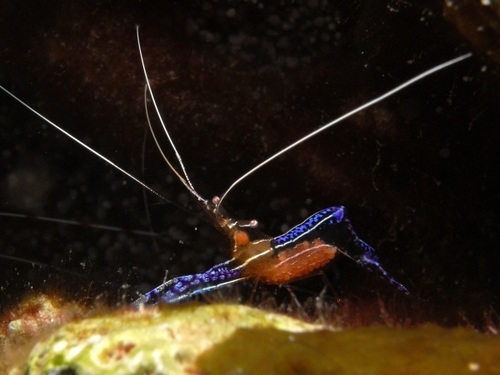
Cleaner Shrimp
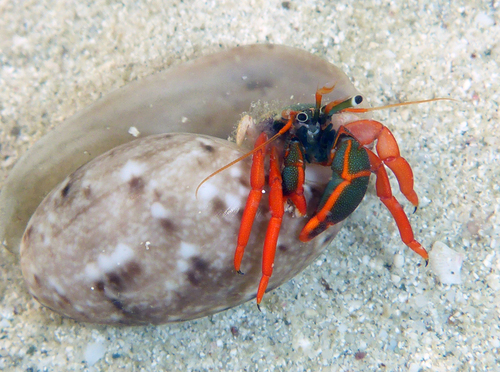
Hermit Crab
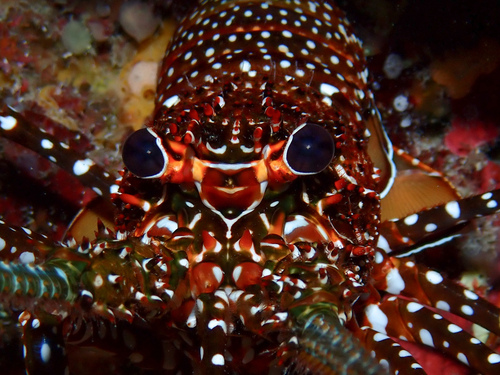
Spiny Lobsters
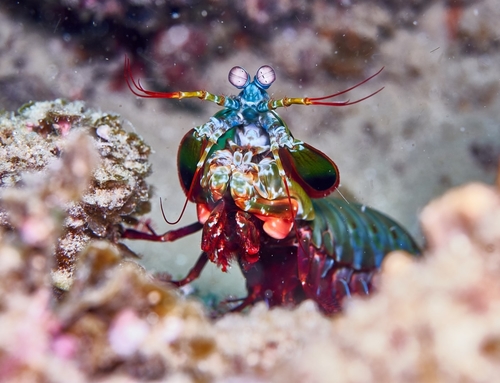
Mantis Shrimp
Marine Guide doesn't have a dedicated filter for this group yet — search by name instead.
Corals & Jellies
(Cnidaria)
The Look
Simple, radially symmetric bodies — a jelly is basically a floating cup shape, while a coral polyp is a tiny version of the same body plan, permanently anchored to a hard base.
Superpower / Secret Weapon
Every tentacle is loaded with microscopic, harpoon-like stinging cells called nematocysts — and hard corals slowly build an entire reef's rocky skeleton from minerals pulled out of seawater.
Visual Examples
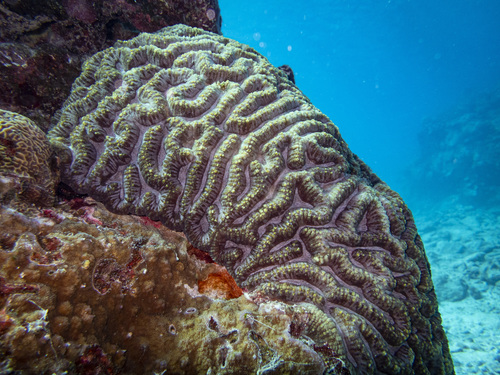
Brain Coral
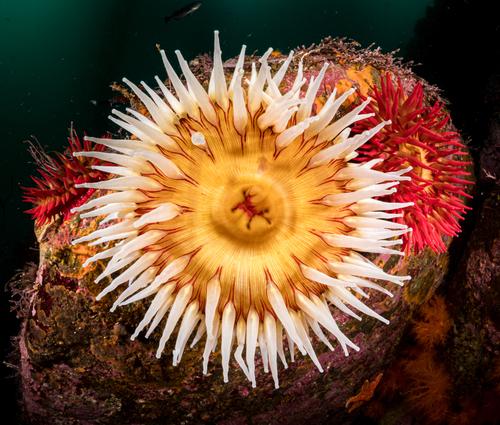
Sea Anemones
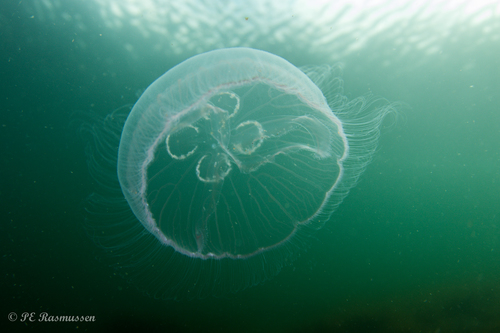
Moon Jellyfish
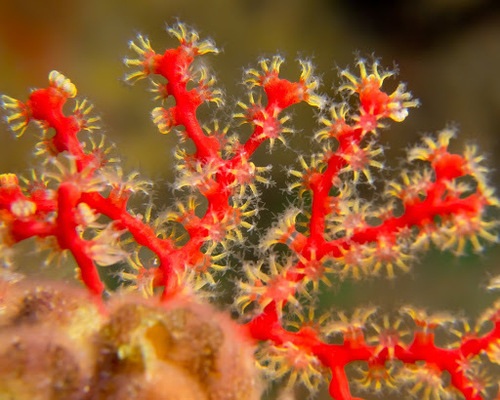
Sea Fans
Marine Guide doesn't have a dedicated filter for this group yet — search by name instead.
Air Breathers
(Reptilia & Mammalia)
The Look
Streamlined bodies built for swimming, but no gills anywhere — every one of them breathes air with lungs, just like you.
Superpower / Secret Weapon
A resting sea turtle can hold its breath for hours, and a dolphin sleeps with only half its brain at a time — just enough to remember to keep surfacing for air.
Visual Examples
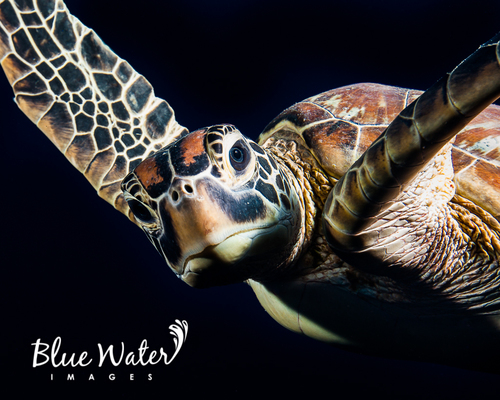
Green Sea Turtles
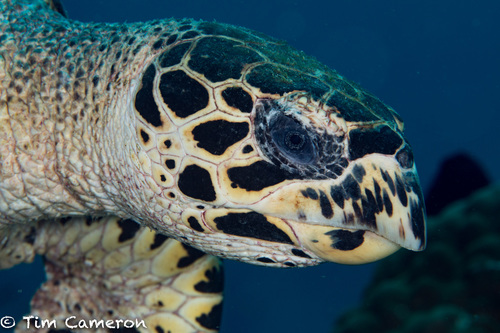
Hawksbill Turtles
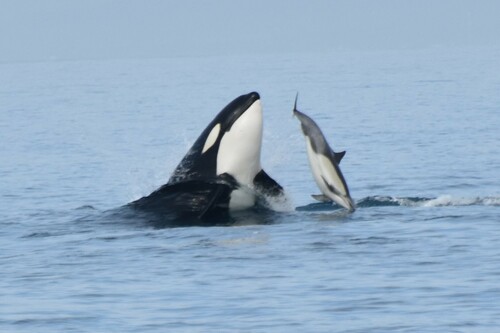
Dolphins
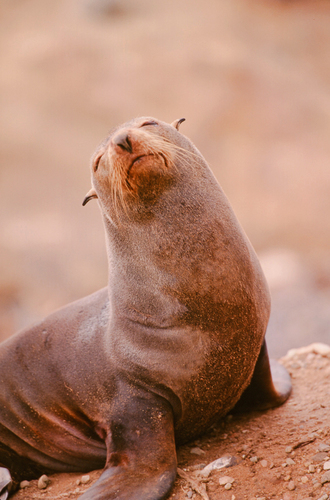
Sea Lions
Spot the Twin: Hawksbill Turtle vs. Green Sea Turtle
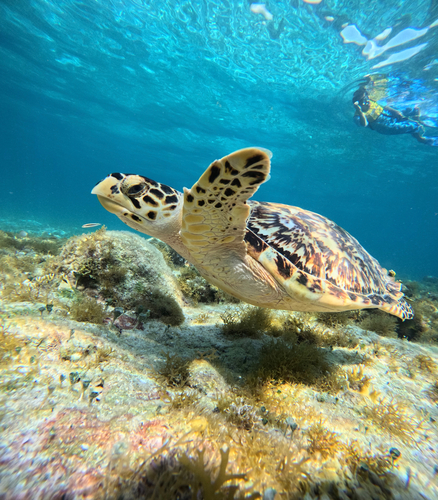
Hawksbill Turtle
- Beak: Narrow, sharply hooked — like a bird of prey
- Carapace scutes: Overlapping, serrated rear edge
- Diet: Sponges — often seen picking at reef crevices
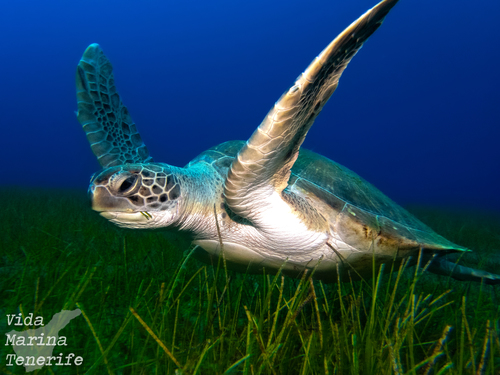
Green Sea Turtle
- Beak: Blunt, rounded beak
- Carapace scutes: Non-overlapping, smooth edge
- Diet: Seagrass and algae — often seen grazing open sand/grass flats
Behavioral Clue Decoders
The full DETECT frameworkHovering close to a coral head
Graceful, sustained cruising in open water
Motionless, flush with the substrate
Quick dart into a crevice
Holding position at a reef cleaning station
Rhythmic pectoral-fin rowing, tail nearly still